Jungjoon Park
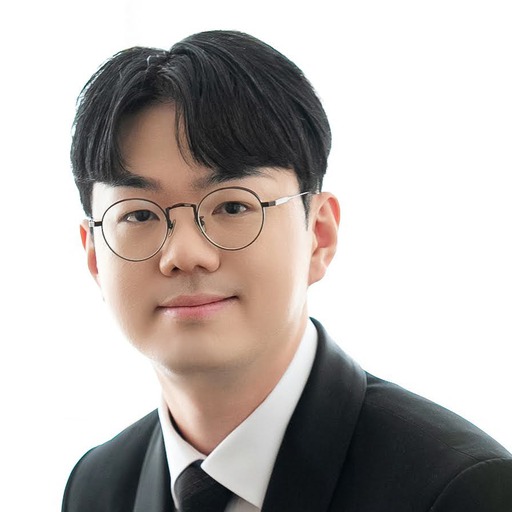
Postdoctoral Fellow at AMILab, KAIST School of Computing.
Ph.D. in Bio & Brain Engineering (KAIST, 2022).
CV · Google Scholar · ORCID · GitHub
News
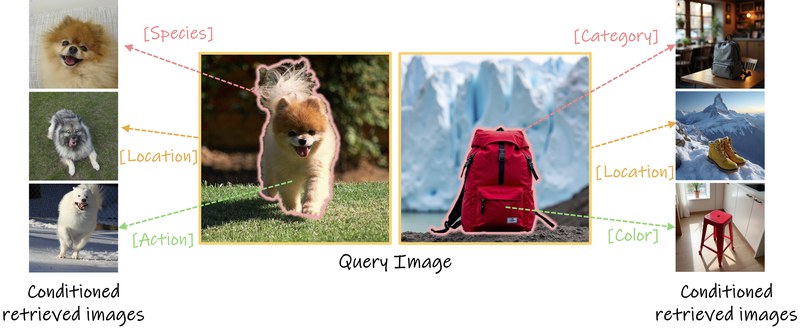
- Apr 2026 — CLAY accepted to CVPR 2026 (first author: Sohwi Lim). Conditional visual similarity modulation in VLM embedding space. Project page
- Feb 2026 — Gave lab seminar The Virtuous Cycle of NeuroAI: Bridging Biological and Artificial Intelligence at KAIST AMILab.
- Aug 2025 — Started as Postdoctoral Fellow at KAIST AMILab (PI: Prof. Tae-Hyun Oh) under the InnoCore Postdoctoral Program. Working on 3D Gaussian Splatting for animal behavior analysis.
- Jun 2025 — Led workshop Neuro-AI Convergence — Foundation Model Workflows for Neuroscience at DBDL, Dept. of BCS, KAIST.
- Apr 2025 — Preprint released: Toward Advancing Emotion Recognition in LLMs (Zenodo, Impact Scholars Program, Neuromatch Academy).
Research Interests
Brain-Inspired Cognitive Architecture, grounded in behavioral neuroscience — designing adaptive agents capable of systematic generalization, continual learning, and context-sensitive coordination of working and long-term memory through canonical neural computations.
- Structured Representation & Memory Consolidation — Separating reusable structure from variable content to enable compositional generalization; coordinating working and long-term memory under task context, with episodic-to-semantic integration through complementary learning systems (hippocampal–neocortical interplay).
- Multi-modal Grounding via Reference Frames — Anchoring abstract concepts to stable spatial representations and binding vision, language, and other sensory streams, drawing on grid-cell coding and predictive computations in canonical cortical circuits.
- Social & Context-Adaptive Cognition — Modeling empathy and social inference through perception–action coupling and theory of mind; learning context-conditioned representations that adapt to who, where, and why — extending a research trajectory from rodent affective empathy and behavioral phenotyping toward multi-agent and human-aligned systems.
Experience
Aug 2025 – Aug 2026 Postdoctoral Fellow — AMILab, KAIST School of Computing.
Host: Prof. Tae-Hyun Oh. Supported by the InnoCore Postdoctoral Program. Vision-Language Models (CLAY, CVPR 2026); 3D Gaussian Splatting for freely-moving animal reconstruction (ongoing).
Oct 2024 – May 2025 Impact Scholar — Impact Scholars Program (ISP), Neuromatch Academy.
Mentored research on LLM-based emotion recognition.
Sep 2022 – May 2024 Co-Founder, COO & Research Director — ACTNOVA.
Co-founded and scaled a neuroscience-AI startup (₩4.3B pre-Series A). Built YOLOv8 + XGBoost pipeline for automated behavioral phenotyping (−70% analysis time); cross-lab collaboration with MIT, KAIST, and Broad Institute. Core project: AVATAR — 3D real-time behavioral analysis system (CV4Animals @ CVPR 2022).
Nov 2014 – Feb 2018 Researcher (Trainee from Jan 2012) — Center for Cognition and Sociality (CCS), Institute for Basic Science (IBS).
Chemogenetics, in-vivo electrophysiology, and behavioral assays on affective empathy and social memory.
Mar 2011 – Dec 2012 Trainee — Brain Science Institute (BSI), KIST.
Rodent social behavior and system consolidation mechanisms.
Education
Sep 2013 – Aug 2022 Ph.D., Bio & Brain Engineering — KAIST.
Dissertation: Behavioral and Genetic Study on Postnatal Factors of Empathy — The Differential Contributions of Social Context and Brain Areas on Observational Fear Learning.
Sep 2010 – Aug 2013 M.S., Bio & Brain Engineering — KAIST.
Mar 2005 – Aug 2010 B.S., Bio & Brain Engineering (Minor: Business Economics) — KAIST.
Publications
2026
CLAY: Conditional Visual Similarity Modulation in Vision-Language Embedding Space
IEEE/CVF Conference on Computer Vision and Pattern Recognition (CVPR 2026)
2025
Toward Advancing Emotion Recognition in LLMs: A Comparative Study of Prompt Strategies, Few-Shot Learning, and Model Ensembling
Zenodo, Apr 2025 (Preprint)
2022
Experience of a Hierarchical Relationship between a Pair of Mice Specifically Influences Their Affective Empathy toward Each Other
Genes, Brain and Behavior 21(5):e12810
AVATAR: AI Vision Analysis for Three-Dimensional Action in Real-Time
CV4Animals Workshop @ CVPR 2022, New Orleans. Poster ID 8, Track I. Not in CVPR proceedings. (Workshop, Non-Archival)
Workshop poster author list (12 names) verified via official poster schedule; bioRxiv preprint 10.1101/2021.12.31.474634 is an earlier core-author version.
2019
The Rostroventral Part of the Thalamic Reticular Nucleus Modulates Fear Extinction
Nature Communications 10:4637
2016
Variability in Empathic Fear Response among 11 Inbred Strains of Mice
Genes, Brain and Behavior 15(2):231–242
* denotes equal contribution; bold denotes the author. Google Scholar
Selected Projects
A selection of engineering and research projects outside publications. View all →
2025 — Applied AI
Upstage AI Lab — AI/ML Engineering
5 ML engineering competitions (Anomaly Detection, RAG QA, Document Classification, Sentiment Analysis, Tabular Prediction) + external company project: LLM-based parent-child dialogue quality assessment and parenting plan recommendation system for ConnectsLab (multi-step pipeline: persona generation → dialogue scoring → plan recommendation).
Stack: PyTorch · HuggingFace · LangChain · LightGBM · XGBoost · Hydra · W&B · OpenAI · Anthropic · Gemini · Ollama · FAISS
LLM-Based Parenting Coach — Dialogue Quality Assessment & Plan Recommendation
Built a multi-step LLM pipeline for parent-child dialogue analysis and personalized parenting plan recommendation. Pipeline: survey-based family persona generation → dialogue simulation → 4-dimensional quality scoring (emotional relationship, active listening, communication clarity, conflict resolution) → personalized plan recommendation via ensemble of dialogue- and survey-based signals. Multi-LLM backend (GPT-4o, Claude, Gemini, Llama) with Levenshtein key correction and retry mechanisms.
Stack: LangChain · Hydra · W&B · OpenAI · Anthropic · Google AI · Ollama
2019 — Performance
Crowd Walk
Performed with artist Lang Lee at Ilmin Museum of Art, Seoul. Real-time emotion recognition from facial expression and EEG drove a crowd-movement performance piece — the audience's collective affective state became a choreographic parameter.
2018 — Vision AI
Grand Prize (DDSA) NAS-Optimized CNN for Driver Monitoring with XAI
Neural Architecture Search for real-time driver drowsiness detection on embedded hardware. Integrated Grad-CAM explainability for regulatory compliance. Won Grand Prize (DDSA) + Encouragement Prize (ETRI).
Teaching & Mentorship
Nov 2025 – Feb 2026 Research Mentor — Seongyoon Park, KAIST AMILab (Individual Research Program).
Co-mentor: Dr. Chenshuang Zhang. Mentored research on human-alignment in multi-modal foundation models.
Jun 2025 Workshop Instructor — Neuro-AI Convergence: Foundation Model Workflows for Neuroscience, DBDL, Dept. of BCS, KAIST.
3-hour seminar + hands-on workshop applying foundation models to brain and behavior data.
Spring 2022 Instructor — Neuroscience 101: What on Earth Is Neuroscience?, KAIST Global Leadership Center, Humanities/Leadership Program III.
Dec 2020 – Aug 2022 Instructor — Python for Neuroscientists, CCS, IBS.
Hands-on course covering data handling, analysis, and visualization for neuroscience research.
Fall 2019 – Fall 2021 Instructor — A Small, Good Thing: Stories of Mind and Life, KAIST Global Leadership Center, Humanities/Leadership Program III.
Discussion-based seminars on cognitive neuroscience, psychology, and self-development.
Feb 2012 – Oct 2013 Supervisor — Tip-of-the-Tongue Phenomenon in Korean-English Bilinguals (high-school mentee: Jiyoon Park).
Literature review, experimental design, analysis, and manuscript preparation.
Awards & Honors
- 2022 Committee Member, Convergence Division, 2022 Science-Belt Research Society Idea Concert (INNOPOLIS).
- 2022 Excellence Prize (Instructor & Course Designer), Neuroscience 101, KAIST.
- 2019 Excellence Prize, Ultimate Question Competition, KAIST.
- 2018 Grand Prize (DDSA) + Encouragement Prize (ETRI), NAS-Optimized CNN for Driver Monitoring with XAI.
- 2012 Grand Prize, Computational Neuroscience Winter School, Korean Society for Computational Neuroscience.
- 2007 Encouragement Prize, Undergraduate Research Program (URP), KAIST.
- 2006 Scholarship, Department of Bio & Brain Engineering, KAIST.
Academic Service & Community
- Co-Founder & Organizer, KAIST NeuroAI Seminar Series (Oct 2020–Present) — interdisciplinary neuroscience × AI seminar series. Featured speakers include Prof. Peter Dayan (MPI Tübingen).
- Co-Founder, Neureka (Jan 2023–Present) — interdisciplinary community for AI-enabled behavioral neuroscience research; founded jointly with colleagues from multiple KAIST labs.
Contact
Email: biasdrive@gmail.com Daejeon, Republic of Korea.